How long should you hold a yoga pose?
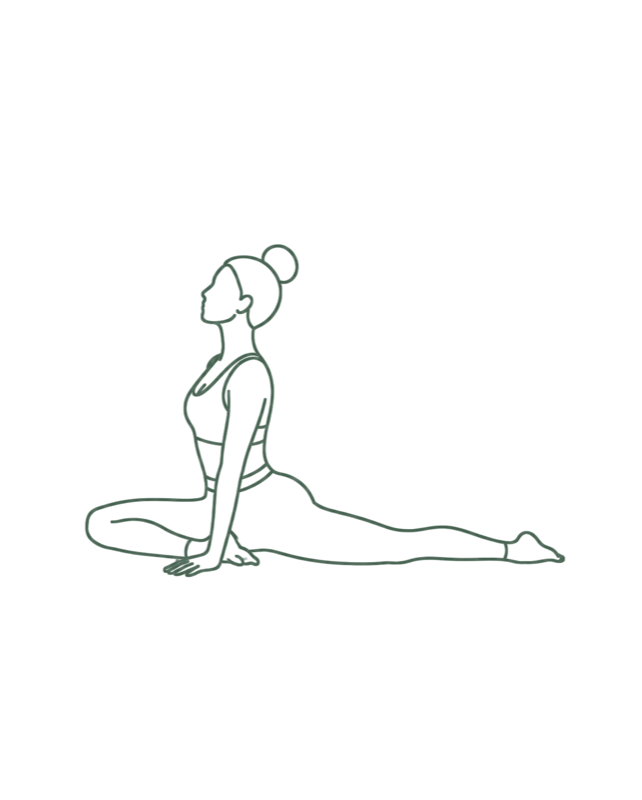
The short answer: Hold time depends on the style and the purpose of the pose. Vinyasa runs one to five breaths, Hatha about 30 seconds to two minutes, strength work 20 to 60 seconds per hold, Yin two to five minutes, and restorative five to twenty minutes, fully supported.
| Class style | Common starting range |
|---|---|
| Vinyasa or flow | 1–5 breaths, often about 5–30 seconds |
| Hatha or alignment-focused | About 30 seconds–2 minutes |
| Power or strength-focused | About 20–60 seconds per working hold |
| Yin | About 2–5 minutes |
| Restorative | About 5–20 minutes, fully supported |
These are planning ranges, not laws. The better question is: what is this pose doing in the class?
Start with the purpose of the pose
A pose may be there to warm a joint, build strength, explore range of motion, teach a shape, create a transition, or help the room settle. The job changes the time.
To warm up
Use shorter, repeated movement instead of a long static hold. Moving in and out of a position can help students learn the path before you ask them to stay there.
To build strength or heat
Hold only while students can keep the shape you are teaching. In many standing or strength-focused poses, 20 to 60 seconds is plenty. If form has clearly changed, extending the clock may no longer serve the original purpose.
To work on flexibility
About 30 seconds is a reasonable starting point for a static muscle stretch. A well-known hamstring study found 30-second holds improved range of motion more than 15-second holds, while 60 seconds did not add a benefit in that specific group and protocol. That does not mean every yoga pose should be held for 30 seconds; it means the number is a useful default when the main goal is a static stretch.
Long-term change comes from consistent practice across weeks, not one heroic hold.
To teach a new pose
Hold long enough to give students time to enter, orient themselves, and hear the one or two cues that matter. A beginner may need more time in fewer poses, not more variety.
To settle
Use minutes, not seconds, and enough support that the pose can actually become restful. A difficult stretch held for two minutes is not automatically restorative.
Yoga pose hold times by style
Vinyasa
Use one breath for transitions and roughly three to five breaths for poses you want students to experience more fully. Rhythm matters. The most common mistake is holding the first side much longer because you were still explaining it.
Hatha
Allow roughly 30 seconds to two minutes when the class is slower and more alignment-focused. That gives a pose time to be examined. You also do not need to fill the whole hold with talking.
Power and strength-focused yoga
Think in working sets: roughly 20 to 60 seconds of effort, followed by enough transition or rest to preserve quality. If you add weights, the recovery is part of the plan, not dead space.
Yin
Two to five minutes is a common range, depending on the pose, the student, and the class. Plan the exit as carefully as the hold. After several minutes of stillness, coming out quickly can feel much more intense than going in.
Restorative
Restorative poses are usually fully supported and held for several minutes. Five to 20 minutes per shape means a 60-minute restorative class may contain only four or five main poses. That is not too little. The time is part of the practice.
How long is one breath?
Teachers count in breaths, so it is worth knowing what a breath actually is.
At rest, most adults breathe around 12 to 18 times a minute, roughly 3 to 5 seconds per breath. A calm teaching pace runs slower: cue a full inhale and exhale and most rooms settle around 5 to 6 seconds per breath, which is why "five breaths" and "30 seconds" land in the same place.
Slower still has real research behind it. Breathing around six breaths per minute, about 10 seconds per cycle, is the pace most studied for relaxation: it reliably increases heart rate variability, a marker of the nervous system settling (this is the resonance-frequency breathing literature; see the sources below). That makes roughly 8 to 10 second breaths a reasonable pace to cue in slow holds and at the end of class, without needing to claim anything more than "this pace tends to calm a room."
Practically:
- Flowing work: about 5 to 6 seconds per breath, one movement per inhale or exhale.
- Slow holds and closing: 8 to 10 seconds per breath, cued gently rather than counted out loud.
- Whichever pace you choose, keep it consistent inside a class. Rooms notice a rhythm more than a number.
How to make the timing fit the class
Add the transitions, not only the holds. Moving a full room from standing to the floor can take 20 to 40 seconds. Do that several times and you have used minutes that were invisible on paper.
Here is one workable 60-minute structure:
| Section | Time |
|---|---|
| Arrive | 4 minutes |
| Warm | 8 minutes |
| Build | 18 minutes |
| Peak | 8 minutes |
| Unwind | 10 minutes |
| Savasana | 8 minutes |
| Transitions and explanation | 4 minutes |
Notice that savasana has an actual number. If rest is whatever remains, it is usually the first thing to disappear.
Also plan both sides. Students may not count every breath, but they can feel when the second side is half as long as the first.
How to teach a longer hold
For a long hold, try this rhythm:
- Set up the pose.
- Offer one adjustment or idea.
- Leave some quiet.
Tell students the length when the hold is unusual: "We will be here for two minutes." Not knowing how long remains can make a hold feel much harder. Always offer a way to reduce the intensity or come out.
Short holds have the opposite problem. If you have one breath, give one cue.
Put the numbers in your plan
Time changes when you are teaching. Sixty seconds at the front of a room can feel much longer than sixty seconds on your own mat.
Write "5 breaths" or "45 seconds" next to the pose. Cue keeps those breath counts and hold times beside your teaching cue, so you are not trying to count, talk, and remember what comes next at the same time. It also makes it easier to see whether the full class fits before you teach it.
Frequently asked questions
How long should you hold a yoga pose for flexibility? About 30 seconds is a practical starting point for a static muscle stretch. The research is more specific than most internet summaries make it sound, so treat 30 seconds as a default, not a universal rule for every pose or person.
How many breaths is 30 seconds? About five slow breaths if one full breath takes roughly six seconds. Breathing rates vary, so seconds and breath counts will not produce identical holds across a full room.
Can you hold a yoga pose too long? Yes. Come out if a pose causes sharp, electrical, radiating, or worsening pain. A long hold is not automatically more effective, especially when the load is going into a joint or the intended shape has fallen apart.
How long should savasana be? For a 60-minute general class, five to ten minutes is a useful range. Protect it as its own section rather than treating it as leftover time.
Should beginners hold yoga poses longer or shorter? Beginners often benefit from fewer poses with enough time to find each shape. The hold should still be comfortable and appropriate; "longer" should mean more time to learn, not more time to endure.
Sources
- Bandy & Irion (1994), "The Effect of Time on Static Stretch on the Flexibility of the Hamstring Muscles"
- Bandy, Irion & Briggler (1997), "The Effect of Time and Frequency of Static Stretching on Flexibility of the Hamstring Muscles"
- Shah et al. (2023), "Acute and Chronic Effects of Static Stretching on Neuromuscular Properties"
- Lehrer & Gevirtz (2014), "Heart rate variability biofeedback: how and why does it work?"
- Laborde et al. (2022), meta-analysis of slow-paced breathing and cardiac vagal activity, Psychophysiology
This article offers general teaching guidance, not individualized medical advice.
Plan it once. Teach it present.
Cue keeps your sequence, your own cues, the breath and the timing on one screen you can read from across the room. Free to start, and it runs in a browser.
Time your next class in Cue