How to memorize yoga poses and their Sanskrit names
The short answer: Do not read the list again. Test yourself on it. Learn poses in small families rather than alphabetically, learn the five or six Sanskrit word-parts that repeat across dozens of names, say the name out loud as you take the shape, and space the reviews out over days rather than cramming the night before.
Teacher training hands you a list of about a hundred poses in two languages and roughly no method. Most people respond by reading the list again. Reading is the one thing that reliably does not work.
Why rereading fails
Looking at "Utthita Trikonasana, Extended Triangle Pose" produces a strong feeling of knowing it. That feeling is recognition, not recall, and they are different abilities. Recognition is picking your friend out of a crowd. Recall is describing their face to a police sketch artist. On the mat, with twelve people waiting, you need recall.
The fix is to make yourself retrieve the answer before you see it. Cover the name, look at the shape, say what it is. Getting it wrong and then seeing the answer teaches you more than getting it right off a page you were already reading.
1. Learn families, not alphabets
A list sorted A to Z puts Bakasana next to Balasana, which have nothing to do with each other. Your memory does not file things alphabetically, it files them by resemblance.
Group them the way a class moves:
- Warriors and their neighbours. Warrior I, II, Reverse Warrior, Extended Side Angle, Triangle, Half Moon. One leg position leads to the next.
- The lunge family. Low Lunge, High Lunge, Crescent, Lizard, Twisted Lunge, Half Splits.
- Prone backbends. Sphinx, Cobra, Upward Dog, Locust, Bow.
- Seated and folded. Staff, Seated Forward Fold, Head to Knee, Wide-Angle, Bound Angle.
Learn six at a time in one family. Six is small enough to actually finish, and the family gives you a thread to pull when one goes missing.
2. Learn the word-parts, not the words
Sanskrit pose names are compounds. Learn about fifteen pieces and you can decode names you have never seen.
| Part | Means | So |
|---|---|---|
| asana | pose, seat | the ending on almost everything |
| utthita | extended | Utthita Trikonasana |
| parivrtta | revolved | Parivrtta Trikonasana is the twisted one |
| supta | reclining | Supta Baddha Konasana |
| ardha | half | Ardha Chandrasana, half moon |
| eka pada | one foot or leg | Eka Pada Rajakapotasana |
| adho / urdhva | downward / upward | Adho Mukha and Urdhva Mukha Svanasana |
| baddha | bound | Baddha Konasana |
| salamba | supported | Salamba Sarvangasana |
Once parivrtta means revolved, you get Revolved Triangle, Revolved Chair, Revolved Half Moon and Revolved Side Angle for free. That is four names for the price of one.
3. Say it while you do it
Memory for movement is not the same store as memory for lists, and you can use both at once. Take the shape, and say the name out loud while you are in it. Not in your head. Out loud.
This is also rehearsal for the thing you will actually be graded on, which is not naming a pose on paper but saying it clearly while watching a room.
4. Space it out
An hour on Sunday beats six hours the night before, and it is not close. Review a family the day you learn it, again the next day, then three days later, then a week later. Each time you nearly forget and then retrieve it, the memory gets more durable.
This is the single highest-return change most trainees can make, and it costs nothing but scheduling.
5. Sequence with them, do not just name them
Naming a pose and knowing where it belongs in a class are separate skills. Once a family is solid, practise the second one: lay out five or six poses and put them in an order you could actually teach. Ask what has to come before the hardest one. Ask what releases it afterwards.
This is the exercise that turns a vocabulary list into a class, and it is the part teacher training rarely gives you enough reps at.
Why cards, specifically
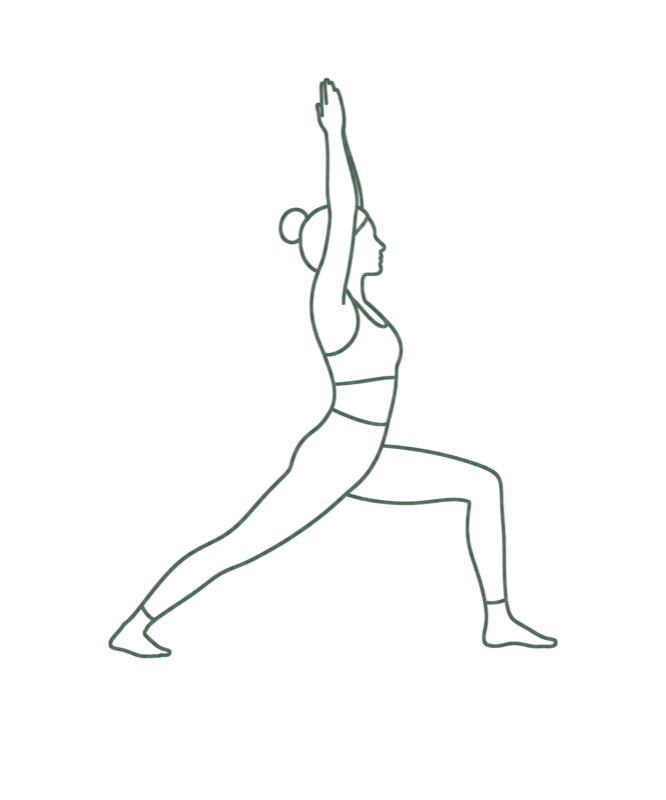 Warrior I
Forward, steady point Opens in Cue
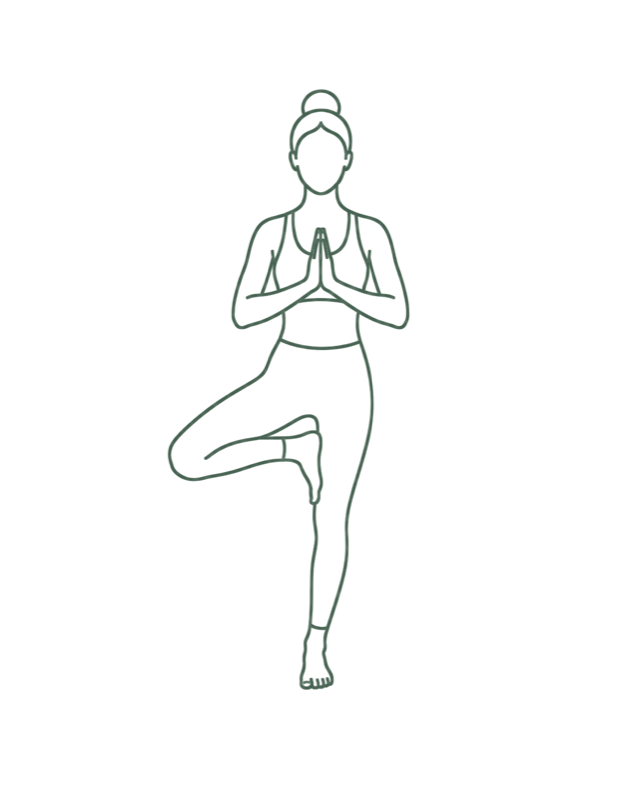
Tree PoseEverything above works on paper. Cards make three of the five steps automatic, which is the only reason I made a deck.
A card is self-testing by construction: the shape is on the front, the answer is on the back, so you cannot accidentally reread. You can sort them into families on a table, and then resort them a different way tomorrow. You can deal five and build a sequence with your hands, which is the step that is genuinely awkward in an app. And the ones you keep missing end up in their own small pile, which is spaced repetition happening whether you planned it or not.
The Cue deck is sixty asana, six breath practices and two Sun Salutations. The front is the line drawing and the name. The back carries three cues you can say out loud, the drishti, the benefits, what to take care with, and the counter poses, plus a code that opens that pose on cueyoga.com if you want to read more. It prints at home on cardstock, cut and go.
It is a print-and-cut PDF rather than a shipped product, so it costs less than a coffee and arrives instantly. If you are mid-training, that matters more than nice packaging.
A four-week plan, if you want one
- Week 1. Standing and the warriors. Six a day, tested not read, reviewed the next morning.
- Week 2. Add the lunge and balance families. Keep testing week one twice.
- Week 3. Backbends, twists, seated. Start dealing five cards and sequencing them.
- Week 4. Everything, shuffled. Teach a friend a ten-minute flow using only cards you drew at random.
By the end you are not remembering a list. You are holding a vocabulary you can teach from, which is the actual goal and the thing that makes your first months of teaching survivable.
Frequently asked questions
How long does it take to memorize the main yoga poses? For the sixty or so poses most trainings cover, about four weeks at twenty minutes a day using active recall and spaced review. Cramming can get you through an exam in a weekend, but very little of it survives to your first class.
Do I need to learn the Sanskrit names to teach? Not to teach a good class. Most studios are happy with English, and some students prefer it. Learn it anyway: the names carry information about the shape, most teacher trainings test it, and knowing what the words mean makes the tradition less opaque.
Are flashcards better than an app for studying asana? For memorising, cards have a real edge: they force recall instead of recognition, and you can sort them physically into families and into a sequence. An app is better once you are planning real classes, because the sequence has to end up somewhere you can teach from.
What should be on the back of a pose card? The Sanskrit name, two or three cues short enough to say out loud, where the eyes go, and what to offer afterwards. Long paragraphs defeat the point, because you should be able to check a card in about a second.
Plan it once. Teach it present.
Cue keeps your sequence, your own cues, the breath and the timing on one screen you can read from across the room. Free to start, and it runs in a browser.
Get the printable pose cards