How to sequence a Vinyasa yoga class
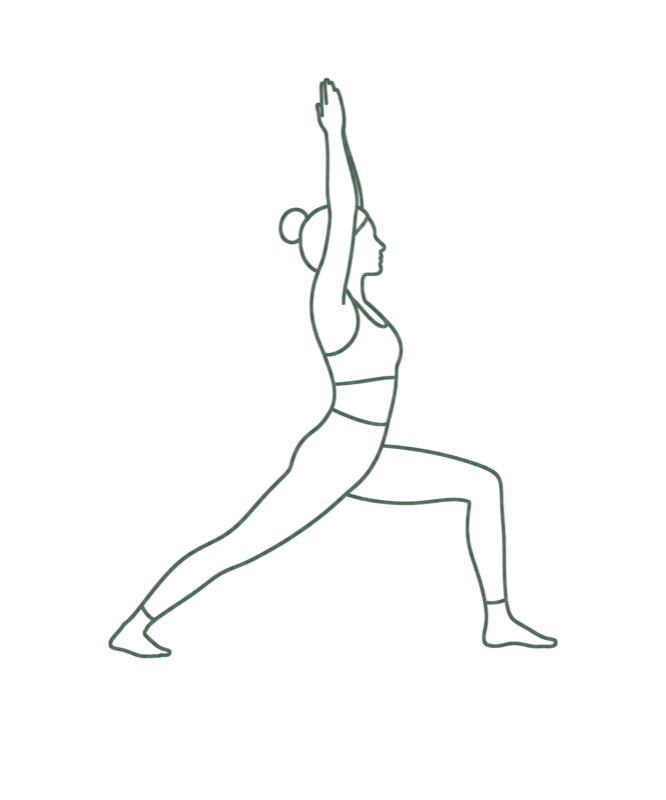
The short answer: Build a Vinyasa class as an arc: settle, sun salutations, a standing phrase that repeats and grows toward one peak, then a deliberate descent to the floor and a protected savasana. Let the breath set the pace, teach in short phrases rather than long chains, and sequence the second side as a mirror so you only have to remember half the class.
Vinyasa gives you the most freedom of any style, which is exactly why it is the easiest to sequence badly. No fixed series, no set poses, just you, a blank page, and sixty minutes to fill with something that flows. Here is the structure I wish someone had handed me in teacher training.
The arc every Vinyasa class shares
Underneath every good flow class is the same shape:
| Section | What happens | 60-min example |
|---|---|---|
| Arrive | Stillness, breath, intention | 5 minutes |
| Ignite | Sun salutations, building heat | 10 minutes |
| Build | Standing phrases, toward the peak | 20 minutes |
| Peak | The pose the class prepared for | 7 minutes |
| Descend | To the floor, unwinding | 10 minutes |
| Rest | Savasana, protected | 8 minutes |
The names matter less than the direction: energy rises, crests once, and comes down slower than it went up. Classes that feel scattered usually break this arc, two peaks, or a descent that takes ninety seconds because the build ran long. Set the timing while the sections are still empty, the same way you would plan any class, and the arc protects itself.
Let the breath set the pace, and the pose count
Vinyasa means moving with breath, and that gives you a metronome. One movement, one breath, roughly five to six breaths a minute once a room settles into ujjayi. That number quietly answers the question every new teacher asks: how many poses fit?
A five-breath hold in Warrior II is about a minute. A full sun salutation is around ten breaths, so two minutes. Count breaths for the flowing parts and minutes for the held parts, and a plan stops being a guess. If you want the research on hold lengths themselves, that has its own article.
Sun salutations are your engine, use them honestly
Surya Namaskara A and B exist because they work: they touch nearly everything, they are rhythmic enough to teach breath pacing, and every studio regular already knows them. Two or three rounds of A and two of B is a complete warm-up for most classes.
Two honest cautions. First, that is already four to six chaturangas, and wrists and shoulders keep count even when you do not. You do not need a vinyasa between every single phrase, and offering "skip the vinyasa, meet us in down dog" every time costs you nothing. Second, if your peak needs something salutations do not give, open hips, outer thighs, spinal twist, add it during the salutations as a variation: a low lunge with the knee wide, a twist in the lunge, a lizard breath. The warm-up should already be whispering the peak.
Build in phrases that repeat and grow
The biggest sequencing mistake in Vinyasa is the endless chain: fourteen poses strung together once per side, impossible for you to remember and for students to learn. The fix is the phrase: three to five poses that travel together.
Teach the phrase slowly the first time, breath by breath. Repeat it at full pace. Then repeat it again and grow it by one or two poses toward the peak. Students relax when material returns, effort goes up while attention cost goes down, and you have three phrases to remember instead of twenty poses. This is the same chunking that makes a sequence stick in your memory while you teach.
A build section for a Half Moon peak might be: a lunge phrase (crescent, twist, hands down), a warrior phrase (Warrior II, side angle, triangle), then the warrior phrase again with Half Moon added at the end, right where side angle already had the body leaning.
Mirror the second side
Sequence the second side as an exact mirror of the first and you halve what you have to remember, students stop guessing, and any imbalance in the plan shows up immediately. If you must vary the sides, vary the second one, after the room has learned the material once. Say "left foot forward" out loud at the start of each phrase, for them and for you.
The descent deserves sequencing too
The way down is not leftover time, it is the half where the nervous system changes gear. Move from standing to hands, to seated, to supine, without popping back up. Counterpose the peak gently rather than instantly reversing it: after deep backbends, knees to chest and a neutral spine before any big fold. Slow the transitions on purpose, one pose per two or three breaths now. If the descent routinely gets eaten, the problem is almost never the descent, it is a build that starts too late, and the timing decision upstream.
Write it as you will teach it
A Vinyasa plan is a living thing at 6 p.m. with twelve bodies in the room. Write it in phrases, mark the sides, note the breath counts where pacing matters, and put one real cue on the poses where your words tend to leave you. I built Cue for exactly this: the builder holds the phrases, timing, and your own cues, and the teaching view keeps the current pose, the side, and what comes next readable from the front of the room, so the flow you sequenced is the flow you actually teach.
Frequently asked questions
How many poses should a 60-minute Vinyasa class have? Somewhere between 25 and 35 including repeats is typical, but the honest answer is measured in breaths: a movement per breath at five to six breaths a minute. Fewer unique poses repeated in phrases beats many poses taught once.
Do I need a chaturanga between every sequence? No. Vinyasas are punctuation, not glue. Four to six in a class is plenty for most rooms, and always offer the option to skip; wrists and shoulders accumulate load faster than most plans account for.
Does every Vinyasa class need a peak pose? It needs a high point the class prepares for, which can be a challenging pose, a long-held simple one, or a breath practice. What matters is one crest with an honest build before it and a real descent after.
How is sequencing different for a beginner Vinyasa class? Shorter phrases, more repetition, and slower transitions with an extra breath in each. Keep the arc identical but make the peak a reachable milestone, and teach sun salutations step by step the first round rather than at tempo.
Plan it once. Teach it present.
Cue keeps your sequence, your own cues, the breath and the timing on one screen you can read from across the room. Free to start, and it runs in a browser.
Sequence your next flow in Cue